Handbook study course › Safe and Responsible Driving
Dealing with particular situations
Emergency vehicles, construction zones, distraction and drowsiness, aggressive drivers and other situations that need extra care.
26 key points from this part of the handbook. Read them, then practise; every point comes from the explanation of one of our practice questions.
Dealing with particular situations
- Novice drivers pay the same fines as fully licensed drivers, plus a 30-day suspension for a first conviction, 90 days for a second, and cancellation for a third.
- Ontario's distracted-driving law applies while you are driving, including when stopped in traffic or at a red light. Pull over safely first.
-
 A STOP sign shown by a traffic control person means you must stop and stay stopped until they stop showing it. Disobeying it is an offence.
- Eating is not covered by the distracted driving law, but any distraction that puts others at risk can lead to a careless driving charge.
- You must pull over and stop for an emergency vehicle approaching from any direction, not only from behind. Stop as close as practical to the right edge, clear of intersections.
- Slow down and use your horn to scare the animal off. Swerving can send you off the road or into oncoming traffic.
- Caffeine, a loud radio or an open window are not substitutes for sleep. Pull over to a safe, well-lit place such as a rest stop, lock the doors and take a nap.
- Inside a construction zone, do not change lanes, be ready for sudden stops, and watch for workers, construction vehicles and equipment.
-
A STOP sign held by a traffic control person must be obeyed even when the road looks clear. There may be workers, equipment or vehicles ahead that you cannot see.
- The hand-held device law applies whenever you are driving, including when stopped in traffic or at a red light. Only a 911 emergency call is an exception.
- For novice drivers: a first conviction means 30 days, a second 90 days, and a third cancels the licence and removes them from graduated licensing.
- Emergency vehicles may use the shoulder when lanes are blocked, so do not move onto or stop on it. Move as far right as you can within the lanes and stop.
- If your lane is blocked and no one is directing traffic, you must yield to drivers coming from the opposite direction before going around.
- Under Ontario law, it is an offence to disobey a STOP or SLOW sign displayed by a traffic control person. Treat it like any other traffic control.
- Speeding fines are doubled in a designated construction zone when workers are present. Without workers, speeding is still an offence with the regular fine.
-
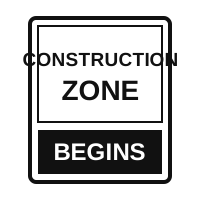 In a designated construction zone, speeding fines are doubled when workers are present. This sign tells you that you are entering such a zone.
- In a work zone, follow the instructions of the people directing traffic. They control traffic through the zone, so proceed slowly and watch for workers and other vehicles.
-
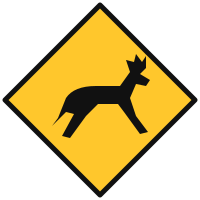 Animal movements are unpredictable, so steering around one can put you in its path or off the road. Slow down instead.
- A first conviction for a fully licensed driver brings 3 demerit points, a fine and a 3-day licence suspension.
- Following within 150 m of a fire vehicle responding to an alarm is illegal. Watch for other emergency vehicles that may follow.
- Failing to pull over and stop for an emergency vehicle with lights or siren brings a fine and 3 demerit points for a first offence. Repeat offences can mean higher fines and up to six months in jail.
- Careless driving can mean a fine of up to $2,000, up to six months in jail, and a licence suspension of up to two years.
- Studies show drowsy-driving collisions tend to happen late at night or early morning (2 a.m. to 6 a.m.) and in the late afternoon (2 p.m. to 4 p.m.).
- Hands-free devices such as an earpiece or Bluetooth are allowed. Holding a phone, typing, or watching unrelated screens is illegal.
- Speeding fines are doubled in a designated construction zone when workers are present. Slow down and obey the lower posted limit to protect road workers.
Driving near emergency vehicles
- A first offence brings a fine of $400 to $2,000, 3 demerit points and a possible licence suspension of up to 2 years. A repeat offence within 5 years costs $1,000 to $4,000.