Handbook study course › Safe and Responsible Driving
Driving at night and in bad weather
Headlights and high beams, rain, fog, snow and ice, skids, and driving when you can't see far.
25 key points from this part of the handbook. Read them, then practise; every point comes from the explanation of one of our practice questions.
- Switch to low beams within 150 m of an oncoming vehicle so the glare does not blind its driver.
- High beams reflect off the water droplets in fog and make it harder to see. Use low beams, plus fog lights if you have them.
- Wet roads on bridges, overpasses and in shaded areas freeze first. Look ahead and slow down before you reach them.
- Stay calm, ease off the accelerator or brake, and steer where you want the vehicle to go without oversteering.
- Pulsing is normal with ABS. Press hard and hold the pedal; releasing or pumping it stops ABS from doing its job.
- High beams reflect off the snow and make it harder to see. Use low beams, slow down and increase your following distance.
- ABS reduces brake force on a wheel that is about to lock, helping you keep steering control. Do not expect it to shorten your stopping distance.
- Ease off the gas or brake and steer where you want the car to go. Small, smooth steering corrections work; jerking the wheel or oversteering makes the skid worse.
-
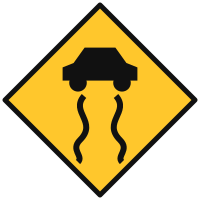 Rain is especially slippery when it first starts. Slow down right away, not only after the road is soaked.
- When it is safe, stop quickly and firmly at 50 km/h. The vehicle should stop in a straight line without pulling to one side.
- A plow's flashing blue lights can be seen from about 150 m. When you see them, slow down early; the plow may be moving much slower than you.
- A plow's wing can reach as far as 3 m to the right, so it may cover part of the next lane or shoulder. Stay well back.
-
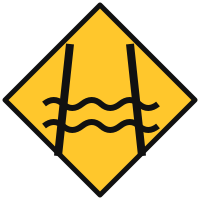 Wet brakes may not work well. When safe, test them, for example with a firm stop at 50 km/h, to dry them out.
- Looking up and slightly to the right helps you keep your lane without being dazzled by the glare.
- Your eyes need time to adjust to the darker tunnel. Slowing down, removing sunglasses and using headlights help you see and be seen.
- With too much water or too much speed, tires ride on the water like water skis, and steering and braking become very hard.
- Good tires with deep tread and lower speeds help your tires keep contact with a wet road.
- Do not use cruise control in snow or on wet or icy roads, or in heavy traffic. You need full control of your speed.
- Most skids happen when drivers go too fast for the conditions. Hard braking, sharp turns or sudden acceleration add to the risk.
- Blowing snow can create whiteouts that hide the road completely. Drive only if you must, use low beams and leave extra space.
- In fog, be patient: avoid passing and lane changes, use low beams, slow down gradually and leave more space ahead.
- Your sun visor and good sunglasses cut daytime glare. Keep both hands on the wheel and slow down if you cannot see well.
- Streaky wipers reduce how well you can see in rain and snow. Replace worn wiper blades.
- In fog, avoid passing and never speed up to pass a slow vehicle. Keep extra following distance; the posted limit is a maximum, not a target.
- If your stopping distance is longer than what your headlights show, you may not stop in time for a hazard. Slow down at night.