Handbook study course › Safe and Responsible Driving
Changing positions: lanes and passing
Changing lanes, blind spots, passing and being passed, and the places where passing is not allowed.
25 key points from this part of the handbook. Read them, then practise; every point comes from the explanation of one of our practice questions.
- Move into the new lane gradually while keeping your speed or increasing it slightly. Slowing down as you change lanes can cause a collision with traffic behind you.
- Do not pass a moving snow plow under any conditions. Its blade and the snow cloud it throws up can hide oncoming traffic and the road edge.
- Motorcycles use a full lane and may move within it to avoid hazards. Never share the lane; to pass, change lanes as you would for any vehicle.
-
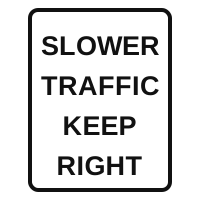 When someone is passing you, let them pass safely. Speeding up while another driver passes you is unlawful and dangerous.
-
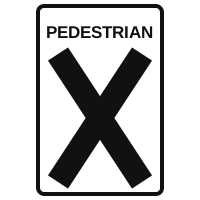 A stopped vehicle may mean a pedestrian is crossing. You must not pass any vehicle within 30 m of a pedestrian crossover.
- You may use the right shoulder only to pass a left-turning vehicle and only if the shoulder is paved. You may never pass on the left shoulder.
- Stay at least 2 m behind the rear doors where passengers are getting on or off. This does not apply where a separate passenger area is provided.
- You may not pass left of a centre line within 30 m of a bridge, viaduct or tunnel, where space and visibility are limited.
-
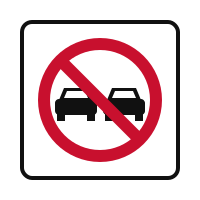 Passing to the left of the centre line within 30 m of a bridge, viaduct or tunnel is not allowed, because your view and escape room are limited.
-
Passing within 30 m of a pedestrian crossover is not allowed, because a vehicle you pass may be stopping for a pedestrian you cannot see.
-
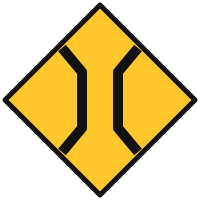 Passing left of the centre line is not permitted within 30 m of a bridge, viaduct or tunnel.
- Move right and let faster traffic pass. Speeding up while someone is passing you is unlawful and dangerous.
- You must pass streetcars on the right unless you are on a one-way road.
- Do not change lanes in or near an intersection, and avoid unnecessary lane changes and weaving, especially in heavy traffic or bad weather.
-
Even where no sign is posted, do not try to pass near the crest of a hill or on a curve, where you cannot see oncoming traffic.
- Look for a safe gap in your mirrors, shoulder-check your blind spot, signal, check again, then move over gradually while keeping or gently increasing your speed.
- Passing on the right is allowed on multi-lane or one-way roads, when overtaking a streetcar, or when overtaking a vehicle that is turning left. It is riskier than passing on the left, so take extra care.
- Signal and return to your lane only when you can see the entire front of the passed vehicle in your inside mirror, so you do not cut it off.
- If the vehicle you are passing speeds up, do not race it. Return to your original lane behind it.
- When you are being passed on an undivided road, watch oncoming traffic, keep to the right of your lane and be ready to slow down so the passing vehicle can move back in front of you sooner.
- The rule to stop 2 m behind the rear doors applies where there is no safety island. Where passengers have a safety island, pass at a reasonable speed, but expect pedestrians to move suddenly.
-
You must not pass moving snow plows under any conditions, whether or not a sign is posted.
-
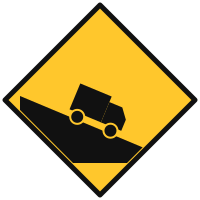 Near the crest you cannot see oncoming traffic. Wait until you have a clear view far enough ahead.
- Passing on the right is more dangerous than passing on the left. If you suddenly move right to pass, the driver ahead may move right at the same time.
- Streetcars must be passed on the right. Passing on the left is allowed only when you are on a one-way road.