
Don't walk signal (orange hand)
A flashing or steady orange hand: pedestrians must not start to cross. Anyone already crossing should go to a safe area as quickly as possible and still has the right-of-way.
2 practice questions use this sign.
Practice questions with this sign
This orange hand appears while a pedestrian is still crossing in front of you. What should you do?
- Go; the pedestrian has lost the right-of-way
- Drive slowly behind the pedestrian
- Sound your horn to warn the pedestrian
- Wait; the pedestrian still has the right-of-way and should finish crossing (Correct answer)
Explanation: The orange hand tells pedestrians not to start crossing. Anyone already crossing should get to safety quickly and still has the right-of-way, so you must wait.
For a pedestrian who has not started crossing, what is the difference between a flashing and a steady orange hand?
- Flashing means hurry across; steady means wait
- Flashing means cross with caution; steady means do not cross
- Steady means cross if no cars are coming
- There is none; both mean do not start to cross (Correct answer)
Explanation: A flashing or steady orange hand both mean pedestrians must not begin to cross. Anyone already crossing should go to a safe area quickly and still has the right-of-way.
Don't mix it up with
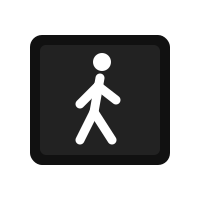
A white walking person. Pedestrians facing it may cross in that direction and have the right-of-way over all vehicles. Turning drivers must yield.
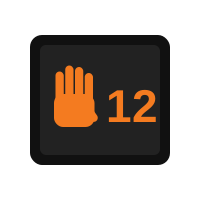
The number shows how many seconds are left for pedestrians to finish crossing. While the orange hand is shown, pedestrians must not start to cross.